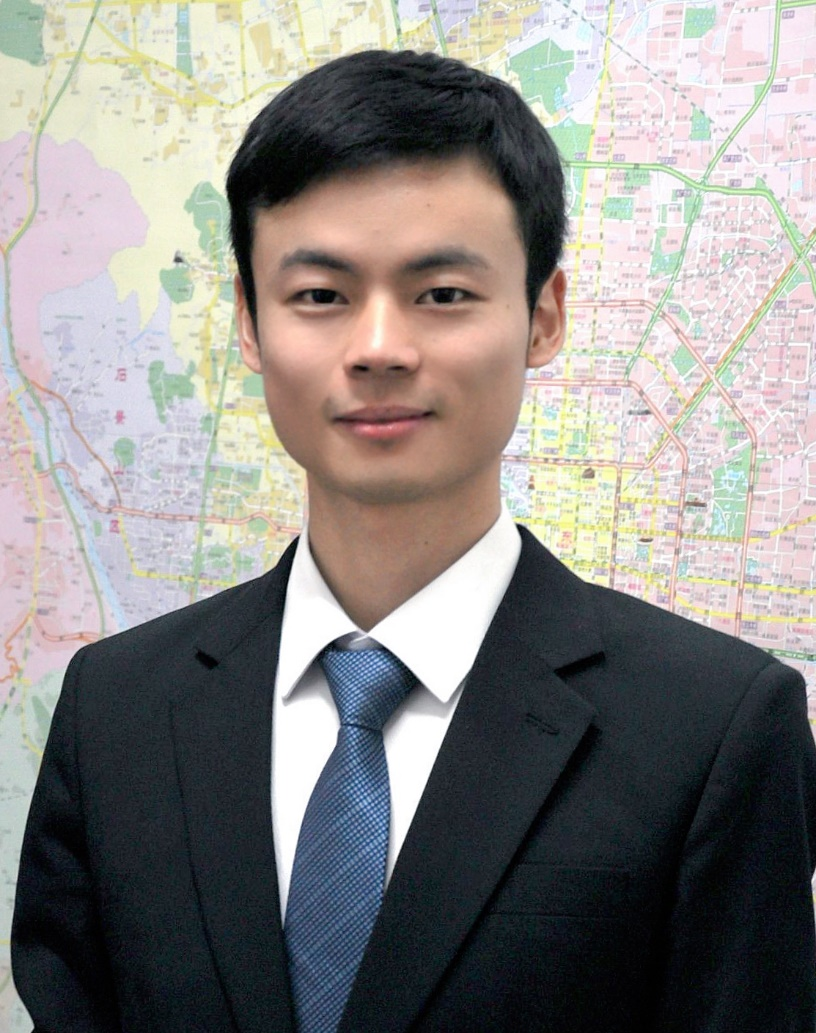
廖华
博士,副教授,博士研究生导师
电子邮箱:liaohua(at)hunnu.edu.cn
办公地点:经纬楼308
研究方向:大模型与地图视觉空间认知,地理空间导航,眼动跟踪
系科:地理信息工程系
教育经历
2014.09-2019.06北京师范大学地理科学学部 地图学与地理信息系统 理学博士
2017.01-2018.01奥地利维也纳科技大学(TU Wien)大地测量与地理信息系 联合培养博士生
2011.09-2014.06北京师范大学地理科学学部 地图学与地理信息系统 理学硕士
2007.09-2011.06湖南师范大学 地理科学学院 理学学士
工作经历
2023.01-至今湖南师范大学地理科学学院副教授
2019.07-2022.12湖南师范大学地理科学学院讲师
科研项目
湖南师范大学教学改革项目,大数据背景下地理信息科学专业学生的空间能力评估与培养研究,在研,主持
国家自然科学基金,面上项目,视觉注意驱动的自适应地图交互模型与方法,2024-2027,在研,主持
国家自然科学基金,青年基金,“虚拟环境与真实环境下的行人地图导航视觉行为模式研究”,2021-2023,主持,在研
湖南省自然科学基金,青年基金,“基于眼动控制的地图交互算法研究”,2021-2023,主持,在研
湖南省教育厅科学研究项目,优秀青年项目,“面向空间认知的行人地图导航行为模式挖掘”,2020-2022,主持,结题
国家自然科学基金,重点项目,“地理空间类脑智能导航基础理论与方法”,2023-2027,参与,在研
国家重点研发计划项目,“地理大数据挖掘与时空模式发现”子课题“地理大数据位置多重感知”,2017-2021,参与,结题
国家自然科学基金,面上项目,“基于眼动跟踪的行人地图导航行为模式识别与预测方法研究”,2018-2022,参与,结题
国家自然科学基金,面上项目,“基于视觉注意与眼动跟踪的地图认知计算模型与方法研究”,2015-2018,参与,结题
国家863项目,“导航与位置空间信息内容服务平台技术”,2011-2012,参与,结题
国家科技支撑项目,“周边地缘环境信息建模与安全评估关键技术研究”,2010-2014,参与,结题
期刊论文
[31]Liao, H.*, Meng,J., Zhou Y.&Dong, W. (2025).Investigating Pupil Dilation during Real-World Wayfinding: Effects of User, Environment, and Visual Attention Factors.International Journal ofDigital Earth. doi:https://doi.org/10.1080/17538947.2025.2542960.
[30]廖华*,孟晋华,赵文迪,董卫华.真实环境下行人导航认知负担度量的瞳孔指标适用性检验,测绘科学, 2025, 50(2):57-66.https://doi.org/10.16251/j.cnki.1009-2307.2025.02.008.
[29] Griffin, A., Reichenbacher, T.,Liao, H., Wang, W., Cao, Y. (2024). Cognitive issues of mobile map design and use.Journal of Location Based Services,https://doi.org/10.1080/17489725.2024.2371288.
[28] Zhang, C.,Liao, H.*, & Meng, J. (2025). Evaluating the performance of gaze interaction for map target selection.Cartography and Geographic Information Science, 52(1): 82-102.https://doi.org/10.1080/15230406.2024.2335331
[27] Zhang, C.,Liao, H.*, Huang, Y., & Dong, W. (2023). Evaluating the Usability of a Gaze-Adaptive Approach for Identifying and Comparing Raster Values between Multilayers.ISPRS International Journal of Geo-Information, 12(10), 412.https://doi.org/10.3390/ijgi12100412
[26]Liao, H., Dong, W. & Zhan, Z. (2022). Identifying Map Users with Eye Movement Data from Map-Based Spatial Tasks: User Privacy Concerns.Cartography and Geographic Information Science, 49(1), 50-69. doi:https://doi.org/10.1080/15230406.2021.1980435.
[25]Liao, H., Zhang, C., Zhao, W. & Dong, W. (2022). Toward Gaze-Based Map Interactions: Determining the Dwell Time and Buffer Size for the Gaze-Based Selection of Map Features.ISPRS International Journal of Geo-Information,11(2), 127. doi:https://doi.org/10.3390/ijgi11020127.
[24]Liao, H., Zhao, W., Zhang, C. & Dong, W. (2022). Exploring Eye Movement Biometrics in Real-World Activities: A Case Study of Wayfinding.Sensors,22(8), 2949. doi:https://doi.org/10.3390/s22082949.
[23]Liao, H., Zhao, W., Zhang, C., Dong, W. & Huang, H. (2022). Detecting Individuals’ Spatial Familiarity with Urban Environments Using Eye Movement Data.Computers, Environment and Urban Systems,93, 1-12. doi:https://doi.org/10.1016/j.compenvurbsys.2022.101758.
[22]Dong, W.,Liao, H.*, Liu, B., Zhan, Z., Liu, H., Meng, L. & Liu, Y. (2020). Comparing pedestrians' gaze behavior in desktop and in real environments.Cartography and Geographic Information Science,47(5), 432–451. doi:https://doi.org/10.1080/15230406.2020.1762513.
[21]Liao, H., Dong, W., Huang, H., Gartner, G. & Liu, H. (2019). Inferring user tasks in pedestrian navigation from eye movement data in real-world environments.International Journal of Geographical Information Science,33(4), 739–763. doi:https://doi.org/10.1080/13658816.2018.1482554.
[20]Liao, H., Wang, X., Dong, W. & Meng, L. (2019). Measuring the influence of map label density on perceived complexity: A user study using eye tracking.Cartography and Geographic Information Science,46(3), 210–227. doi:https://doi.org/10.1080/15230406.2018.1434016.
[19]Liao, H.& Dong, W. (2017). An exploratory study investigating gender effects on using 3D maps for spatial orientation in wayfinding.ISPRS International Journal of Geo-Information,6(3), 1-19. doi:https://doi.org/10.3390/ijgi6030060.
[18]Liao, H., Dong, W., Peng, C. & Liu, H. (2017). Exploring differences of visual attention in pedestrian navigation when using 2D maps and 3D geo-browsers.Cartography and Geographic Information Science,44(6), 474-490. doi:https://doi.org/10.1080/15230406.2016.1174886.
[17]Liao, H., Dong, W., Liu, H. & Ge, Y. (2015). Towards Measuring and Visualizing Sustainable National Power—A Case Study of China and Neighboring Countries.ISPRS International Journal of Geo-Information,4(3), 1672-1692. doi:https://doi.org/10.3390/ijgi4031672.
[16] He, B., Dong, W.,Liao, H., Ying, Q., Shi, B., Liu, J. & Wang, Y. (2023). A geospatial image based eye movement dataset for cartography and GIS.Cartography and Geographic Information Science, 1-16. doi:https://doi.org/10.1080/15230406.2022.2153172.
[15] Dong, W., Qin, T., Yang, T.,Liao, H., Liu, B., Meng, L. & Liu, Y. (2022). Wayfinding Behavior and Spatial Knowledge Acquisition: Are They the Same in Virtual Reality and in Real-World Environments?Annals of the American Association of Geographers, 112(1), 226-246. doi:https://doi.org/10.1080/24694452.2021.1894088.
[14] Dong, W., Yang, T.,Liao, H.& Meng, L. (2020). How does map use differ in virtual reality and desktop-based environments?International Journal of Digital Earth, 13(12), 1484-1503. doi:https://doi.org/10.1080/17538947.2020.1731617.
[13] Dong, W., Zhan, Z.,Liao, H., Meng, L. & Liu, J. (2020). Assessing Similarities and Differences between Males and Females in Visual Behaviors in Spatial Orientation Tasks.ISPRS International Journal of Geo-Information, 9(2), 115. doi:https://doi.org/10.3390/ijgi9020115.
[12] Dong, W., Qin, T.,Liao, H., Liu, Y. & Liu, J. (2020). Comparing the roles of landmark visual salience and semantic salience in visual guidance during indoor wayfinding.Cartography and Geographic Information Science, 47(3), 229-243. doi:https://doi.org/10.1080/15230406.2019.1697965.
[11] Wang, C., Chen, Y., Zheng, S. &Liao, H.(2018). Gender and Age Differences in Using Indoor Maps for Wayfinding in Real Environments.ISPRS International Journal of Geo-Information, 8(1), 11. doi:https://doi.org/10.3390/ijgi8010011.
[10] Liu, Z., Anderson, B., Yan, K., Dong, W.,Liao, H.& Shi, P. (2017). Global and regional changes in exposure to extreme heat and the relative contributions of climate and population change.Scientific Reports, 7, 43909. doi:https://doi.org/10.1038/srep43909.
[9] Dong, W., Zhang, S.,Liao, H., Liu, Z., Li, Z. & Yang, X. (2016). Assessing the effectiveness and efficiency of map colour for colour Impairments using an eye-tracking approach.The Cartographic Journal, 53(2), 166-176. doi:https://doi.org/10.1179/1743277413Y.0000000053.
[8]Dong,W., Li, X., Wang, P.,Liao, H., Wang, X., & Wang, Q. (2015) The Effects of Weather Factors on Hand, Foot and Mouth Disease in Beijing.Scientific Reports. DOI:https://doi.org/10.1038/srep19247.
[7] Chen, J., Dong, W., Li, R.,Liao, H., & Cheng Y. (2015) A GIS Perspective for Borderlands Modelling and Understanding: Challenges and a Research Agenda.ISPRS International Journal of Geo-Information, 6, 661-676. DOI:https://doi.org/10.3390/ijgi4020661.
[6] Dong, W., Liu, Z.,Liao, H., Tang, Q. & Li, X.e. (2015). New climate and socio-economic scenarios for assessing global human health challenges due to heat risk.Climatic Change, 130, 505-518. doi:https://doi.org/10.1007/s10584-015-1372-8.
[5] Dong, W., Z. Liu, L. Zhang, Q. Tang,H. Liao& X. e. Li (2014) Assessing Heat Health Risk for Sustainability in Beijing’s Urban Heat Island.Sustainability, 6, 7334-7357.DOI:https://doi.org/10.3390/su6107334.
[4] Dong, W.,Liao, H., Xu, F., Liu, Z., & Zhang, S. (2014). Using eye tracking to evaluate the usability of animated maps.Science China Earth Sciences, 57(3):512-522. DOI:https://doi.org/10.1007/s11430-013-4685-3.
[3] Dong, W.,Liao, H., Roth, R.E., & Wang, S. (2014). Eye-tracking to Explore Potential of Enhanced Imagery Basemaps in Web Mapping.The Cartographic Journal, 51(4): 313-329. DOI:https://doi.org/10.1179/1743277413Y.0000000071.
[2]董卫华,廖华*,詹智成,刘兵,王圣凯&杨天宇(2019). 2008年以来地图学眼动与视觉认知研究新进展.地理学报, 74(3), 599-614. doi:https://doi.org/10.11821/dlxb201903015.
[1]周秋文,杨胜天,廖华,马龙生,韦小茶&颜红(2016).地缘环境单元划分方法及实例研究.世界地理研究, 25(4), 58-66.Doi:https://doi.org/10.3969/j.issn.1004-9479.2016.04.007.
会议论文
[6] Griffin, A. L., Reichenbacher, T.,Liao, H., Wang, W., & Cao, Y. (2023).Cognitive issues of mobile map design and use: A collaborative research agenda Abstracts of the 31st International Cartographic Conference (ICC 2023), Cape Town, South Africa.https://ica-abs.copernicus.org/articles/6/79/2023/ica-abs-6-79-2023.pdf
[5]Liao, H. & Dong, W., (2019). Challenges of Using Eye Tracking to Evaluate Usability of Mobile Maps in Real Environments. ICA Workshop on User Experience Design for Mobile Cartography: Setting the Agenda, July 11 & 12, 2019, Beijing, China. Available from:https://use.icaci.org/wp-content/uploads/2018/11/LiaoDong.pdf.
[4]Liao, H., Dong, W., Gartner, G. & Liu, H., (2018). Identifying user tasks in map based-pedestrian navigation from eye tracking data. In: P. Kiefer, Huang, H., Van de Weghe, N. & Raubal, M. eds. Adjunct Proceedings of the 14th International Conference on Location Based Services, 14-17 Jan 2018 Zurich, Switzerland 141-146. doi:https://doi.org/10.3929/ethz-b-000225606.
[3] Dong, W., &Liao, H.(2016). Eye tracking to explore the impacts of photorealistic 3d representations in pedstrian navigation performance. The International Archives of the Photogrammetry, Remote Sensing and Spatial Information Sciences, 41, 641-645.https://isprs-archives.copernicus.org/articles/XLI-B2/641/2016/.
[2]Liao,H., Peng,C., Dong,W.(Oct, 2013). Using Eye Tracking to Evaluate the Usability of Maps for Pedestrian Navigation. Beijing: 14thNational Seminar of Youth Geographers. (in Chinese).
[1]Liao, H., Dong, W. (Oct, 2014). Eye Tracking Based User Visual Search Behaviour Analysis for Map Reading. Xuzhou: Chinese Annual Meeting of GIS Theories and Methods 2014. (in Chinese).
软件著作权
[1]中国周边地缘环境信息系统,登记号:2015SR034036
专著与教材
[1]地图学空间认知眼动实验原理与方法,2021,北京:科学出版社,参编(排名:3/14)
[2]中国周边地缘环境信息系统:设计、开发与制图,2015,北京:科学出版社,参著(排名:6/8)
荣誉与奖励
2025,第十四届全国大学生GIS应用技能大赛“优秀指导老师”,中国地理信息产业协会、中国地理学会
2025,第八届湖南省大学生测绘综合技能大赛“优秀指导老师”,湖南省教育厅
2024,第24届青年教师课堂教学竞赛,二等奖、百优教学设计,湖南师范大学
2024,第七届湖南省大学生测绘综合技能大赛“优秀指导老师”,湖南省教育厅
2024,第十三届全国大学生GIS应用技能大赛“优秀指导老师”,中国地理信息产业协会、中国地理学会
湖南师范大学“世承人才”计划入选者,湖南师范大学
第十二届全国大学生GIS应用技能大赛“优秀指导老师”,中国地理信息产业协会、中国地理学会
2023年湖南省测绘地理信息教学成果奖,二等奖,排名3/5,湖南省测绘地理信息学会
第23届青年教师课堂教学竞赛,百优教学设计,湖南师范大学
第十一届全国大学生GIS应用技能大赛“优秀指导老师”,中国地理信息产业协会、中国地理学会
地理信息科技进步奖,一等奖,排名5/5,中国地理信息产业协会
优秀博士学位论文,北京师范大学
优秀辅导员,湖南师范大学
博士研究生国家奖学金,教育部
硕士研究生国家奖学金,教育部
国家励志奖学金,湖南省教育厅
承担课程
本科生课程:地图学,数据结构,计算机图形学,专题地图编绘,地理空间认知理论与方法
研究生课程:遥感与大数据应用,空间信息可视化

